Invisalign · For international patients
Invisalign in Seoul,
Planned by an Orthodontic Specialist
What this page covers
Invisalign works well in Seoul for people who live here or come back regularly — and less well as a one-trip project. Aligner treatment runs for months, and the result depends less on the brand of plastic than on how the movement is planned and corrected along the way.
- Treating doctor — Woochan Hwang, DDS, board-certified orthodontic specialist in Korea and Invisalign Diamond Provider
- Planning — records, ClinCheck design, refinements and retention handled by the same doctor
- Visits — typically every 6–10 weeks, with several aligner sets given at a time
- Remote monitoring — available, so progress can be checked between visits
- Alignment and cosmetic finish — Invisalign, veneers and whitening can be planned together as one sequence
- Location — REVE Dental Clinic, 138 Dosan-daero, Gangnam · 5 min from Sinsa Station Exit 1 · 3 stops from Gangnam Station (Shinbundang Line)
Case · Invisalign, 9 months
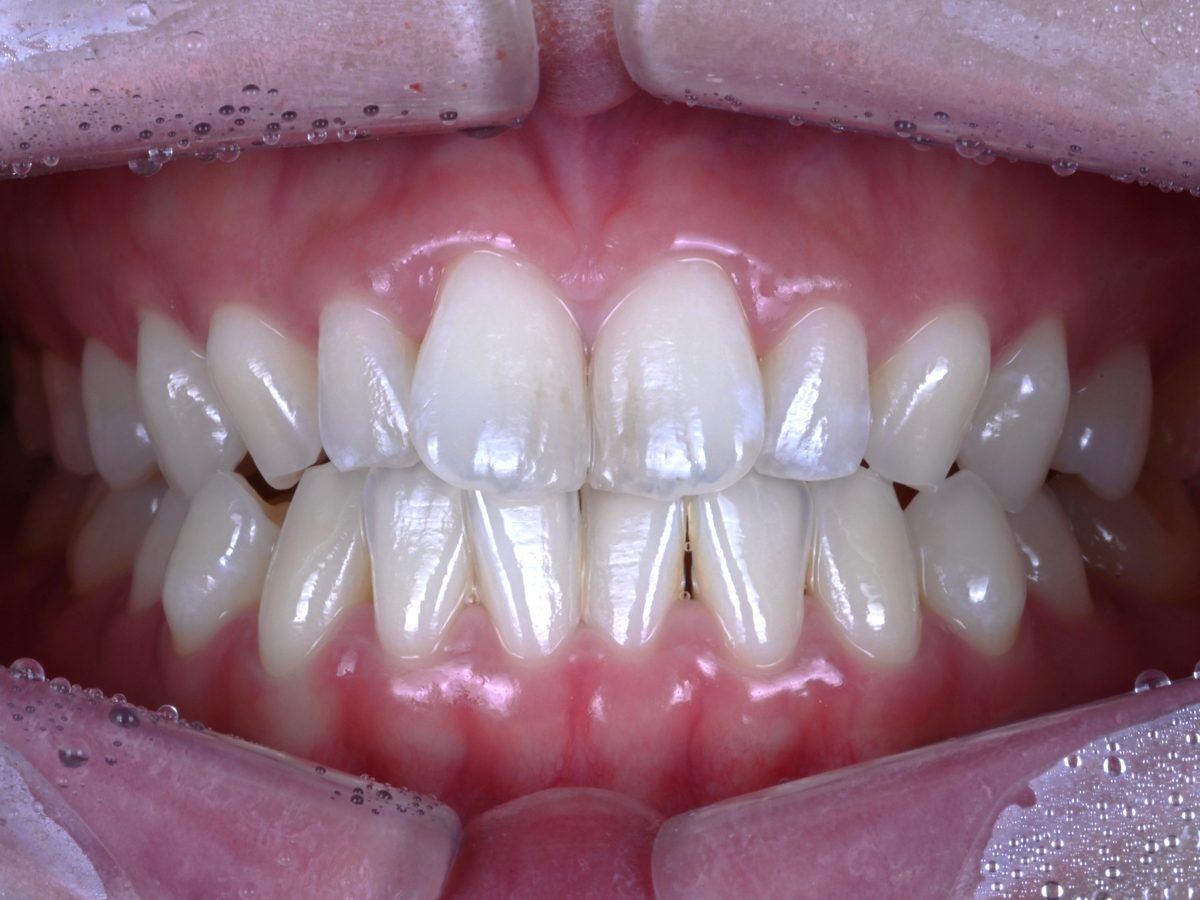
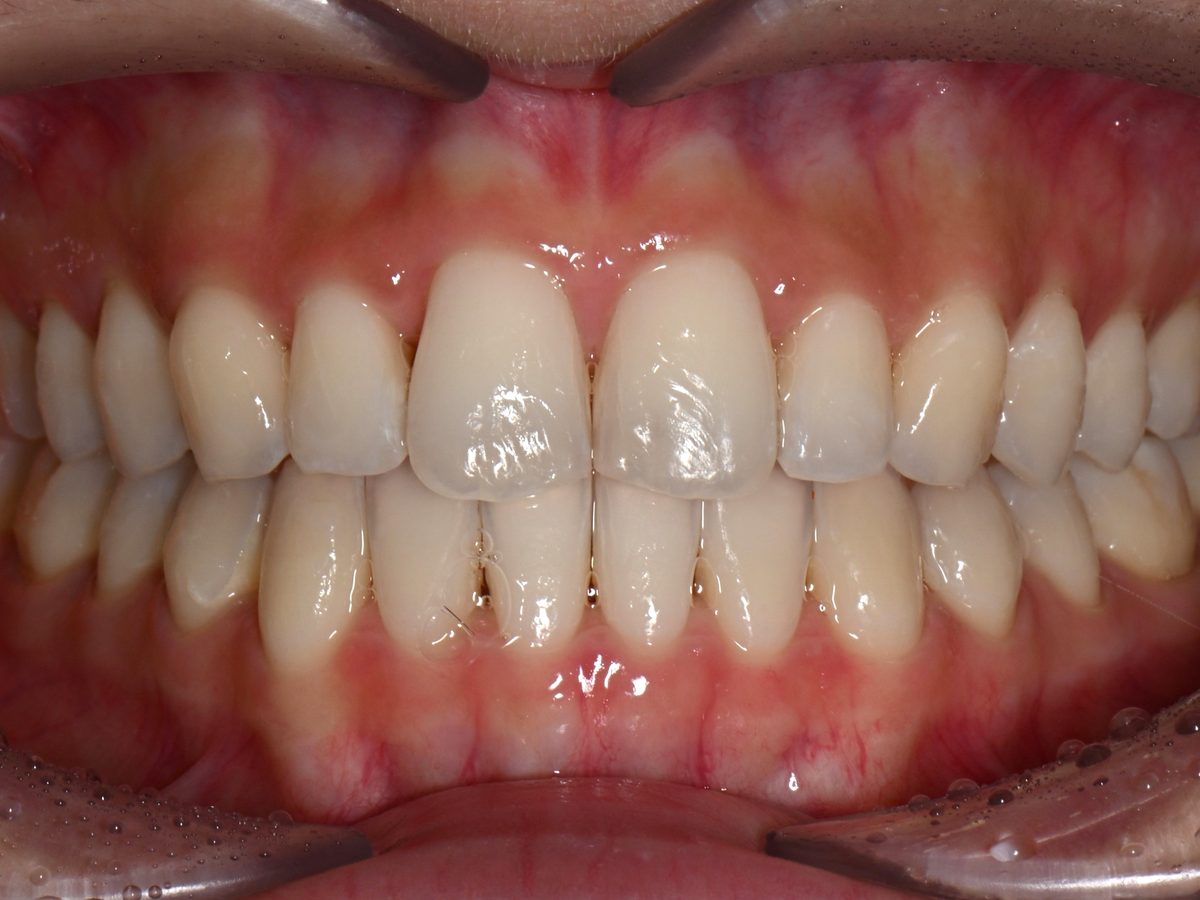
Crowding and rotation in the upper and lower front teeth, aligned with Invisalign over 9 months. Individual results vary.
Who Is Invisalign in Seoul Right For?
It's worth being direct about this, because it saves people a wasted trip.
- Based in Korea — expats, students, long-term workers and military personnel. The straightforward case.
- Frequent visitors — if you're in Seoul every two to three months for work or family, the check-up rhythm fits naturally.
- Short cases with a defined end — minor relapse or small spacing, where the plan is short enough to supervise properly.
If you're in Seoul once and your concern is how your front teeth look, a treatment with a defined endpoint — veneers or whitening — may be more realistic.
Is It as Effective as Braces?
For many cases, yes. A 2025 systematic review and meta-analysis of 15 trials covering 1,084 patients found no significant difference in the quality of results or treatment time between clear aligners and fixed braces in non-extraction cases, and concluded that the choice should come down to case complexity and patient compliance.[1]
Aligners also have consistent advantages: a review of 32 studies found better periodontal indices, less early pain and better quality of life during treatment, largely because the aligners come out for brushing.[2]
Where braces still do better
- Extraction cases — closing large spaces while keeping roots upright is more predictable with fixed appliances
- Complex movements — significant rotations, root torque and vertical movements
- Low wear time — aligners need 20–22 hours a day; if that isn't realistic, braces are the safer choice
Attachments and, where needed, temporary anchorage devices have widened what aligners can control,[3] but not for every case — which is why the diagnosis matters more than the appliance.
How Do Visits Fit Around Travel?
A typical sequence looks like this:
- Records — X-rays, a 3D intraoral scan and bite analysis. This is where the decision is made about whether aligners can actually reach your goal.
- Plan review — the ClinCheck simulation of the planned movement, reviewed before you commit.
- Delivery — attachments bonded, the first aligners fitted, wear instructions given.
- Check-ups — typically every six to ten weeks, depending on the case. Several aligner sets can be given at one visit, and remote monitoring is available so progress can be checked between visits.
- Retention — retainers after treatment. Teeth drift back without them, however well the active phase went.
Can Alignment and a Cosmetic Finish Be Planned Together?
Yes — and for many adults this is the more useful question. People often arrive asking for veneers when the underlying issue is position, or asking for Invisalign when what bothers them most is shape or colour.
When the same orthodontic specialist plans both, the order can be decided around your teeth rather than around a single treatment:
- Position first — rotated or crowded teeth are aligned with Invisalign before anything is bonded
- Then colour — whitening before any veneers are made, so the veneer shade is matched to the final natural shade
- Then shape, only if still needed — veneers after alignment can often be much thinner, or turn out to be unnecessary
Case · Alignment first, then veneers
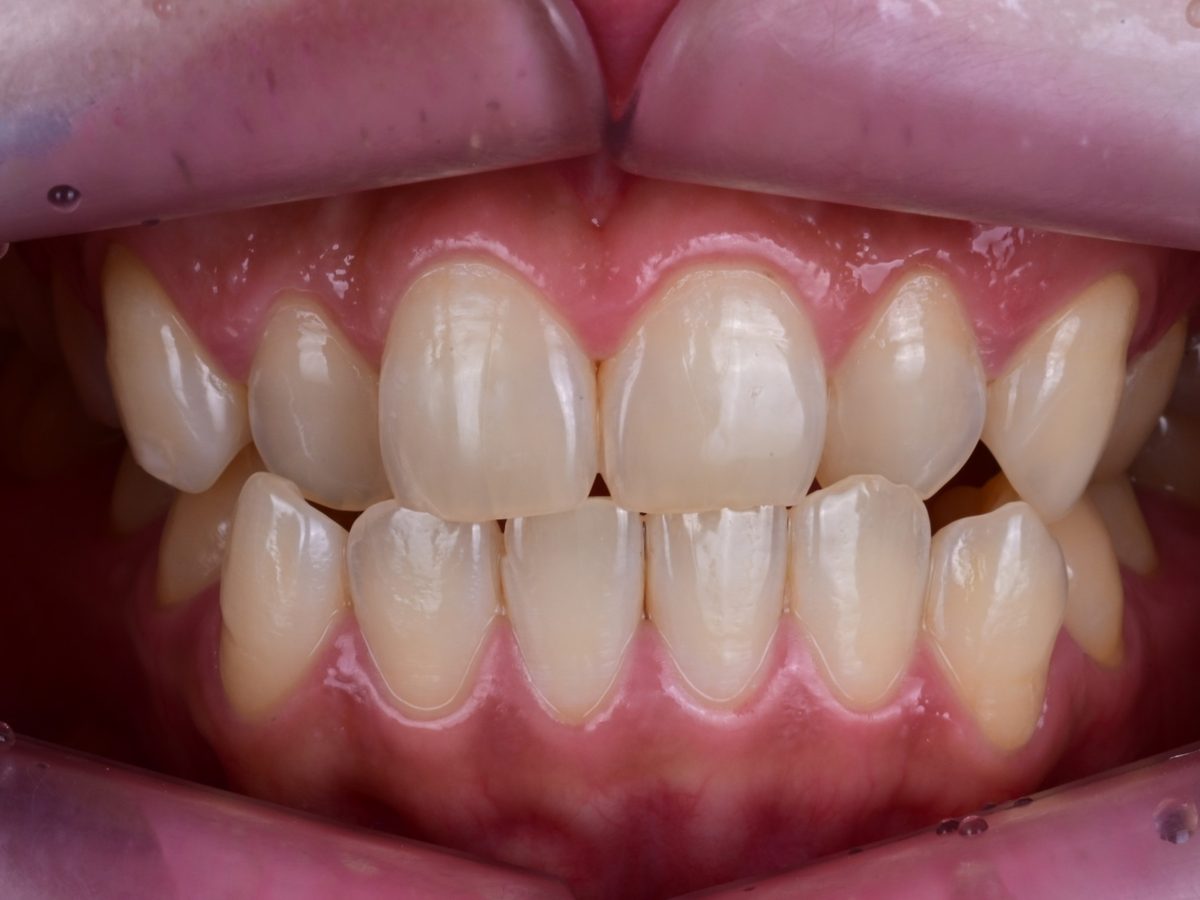
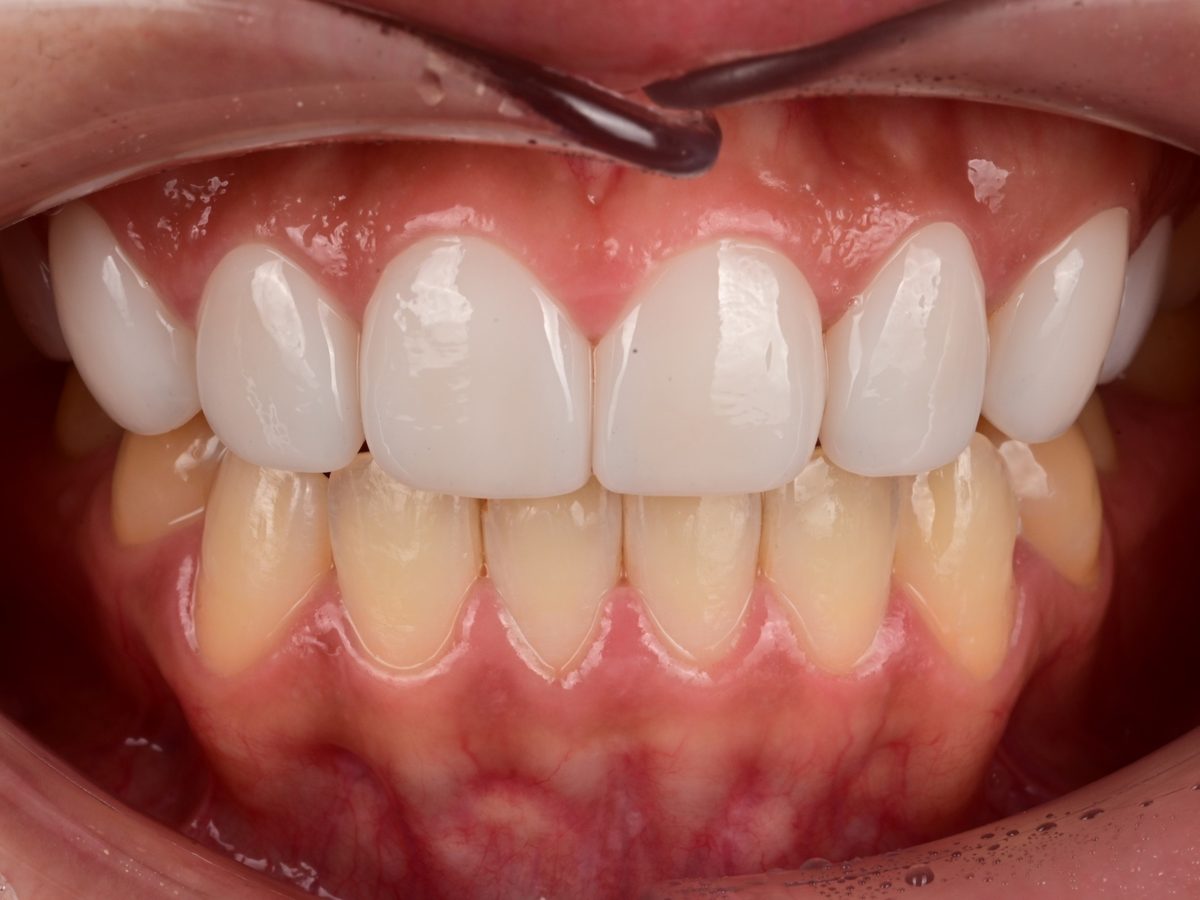
Veneering rotated teeth directly means removing far more enamel just to make an uneven surface look even. Moving them into position first allowed the veneers that followed to stay thin. Individual results vary.
How Do I Choose an Invisalign Provider in Seoul?
In Korea, any licensed dentist can offer Invisalign. A few questions separate a careful plan from a quick one.
1. Is the treating dentist an orthodontic specialist?
A board-certified orthodontic specialist (교정과 전문의) has completed accredited residency training in tooth movement. With aligners, the plan is set before the first tray is made — so the diagnostic training behind it matters.
2. What does the Invisalign tier actually mean — and whose is it?
Provider tiers are awarded by Align Technology based on the number of cases started within a set period, and they're reassessed periodically.[4] That makes them a reasonable indicator of experience volume — but not a rating of outcomes.
The official Invisalign Doctor Locator lets you search by the treating doctor's own name.
3. Will the same doctor plan and supervise the whole case?
Ask who designs the ClinCheck and who handles refinements. Plans rarely survive a mid-treatment handover.
4. Will they tell you what aligners can't do in your case?
"Aligners can do everything" is a warning sign. A provider who knows the limits will name the difficult movements in your case — and say so if braces would serve you better.
Who Plans Your Treatment
Dr. Woochan Hwang is a board-certified orthodontic specialist in Korea and an Invisalign Diamond Provider. He trained at Yonsei University College of Dentistry and completed his orthodontic residency at Gangnam Severance Hospital, and is a Clinical Assistant Professor at Yonsei University College of Dentistry.
He plans each Invisalign case personally, from records and ClinCheck design through refinements and retention, and plans veneers and whitening alongside orthodontics when a case needs both — at REVE Dental Clinic in Sinsa-dong, Gangnam.
References
- Alhafi ZM, Hajeer MY, Alam MK, Jaber ST. Quality and stability of orthodontic treatment outcomes with clear aligners versus fixed appliances: a systematic review and meta-analysis. Eur J Orthod. 2025;47(6):cjaf091.
- Comparative impact of clear aligners versus fixed orthodontic appliances on periodontal health, pain, and quality of life: a systematic review and meta-analysis. BDJ Open. 2026.
- Temporary anchorage devices in clear aligner therapy: a systematic review. (14 studies; improved precision and control in intrusion, extrusion and distalisation.)
- Align Technology, Invisalign provider tier criteria; Invisalign Doctor Locator.
This page is for general information and does not replace an individual diagnosis. Whether aligners are appropriate, how long treatment takes and how often visits are needed depend on your case and are confirmed after an in-person examination.